.png)


How to Stay Safe While Waiting for a Tow Truck on the Side of the Road
A car breakdown is not just stressful—it can be genuinely dangerous, especially on busy roads, with hundreds of deaths and billions in costs linked to disabled-vehicle crashes. The post lays out practical steps to stay safe while waiting for help, including pulling over carefully, boosting visibility, staying inside when possible, calling for assistance with your exact location, watching for scammers, knowing Move Over laws, keeping an emergency kit, and preventing breakdowns with routine maintenance.

A car breakdown can happen at the most inconvenient time and oftentimes in the most inconvenient places. While your car breaking down can be stressful, it is also a very dangerous situation to be in - a fact that not many people think about.
According to the Insurance Institute for Highway Safety (IIHS), disabled-vehicle crashes in the U.S. killed about 566 people and injured 14,371 per year between 2016 and 2018. Furthermore, these incidents cost an estimated $8.8 billion annually in medical bills and lost wages.
Pulling over on a highway shoulder or roadside can put drivers, passengers, and roadside responders at risk - something every driver should keep in mind. However, by taking a few key precautions, you can enhance your safety while waiting for roadside assistance or a tow truck to help you manage a breakdown.
Eight Helpful Tips to Practice Safety While Waiting for a Tow Truck on the Side of the Road
Here are eight tips to help you stay safe and practice precaution when your car breaks down on the side of the road.
- Safety is First Priority
The moment you sense something is wrong with your vehicle, such as a tire blowout or the check engine light coming on, you need to find a safe location to stop. Move your car off the road, on the right shoulder or an exit ramp, and avoid making a stop on bridges, narrow lanes, or turns with low visibility.
A few reminders:
- Turn on your hazard lights
- Your wheels should be turned away from traffic, especially if you’re on a hill.
- Make sure to have your parking brake on with your gear in park.
If, on the chance you are unable to move your car to a safe spot, stay inside your car, call for help immediately and make sure your seatbelt is fastened. The Centers for Disease Control and Prevention (CDC) states that wearing a seatbelt reduces the risk of serious injury by about 50%.
- Improve the Visibility of Your Car
IIHS reported that about 95% of stopped-vehicle crashes involve a moving vehicle striking the stationary one. That’s why it's imperative to make your car as visible as possible when you stop.
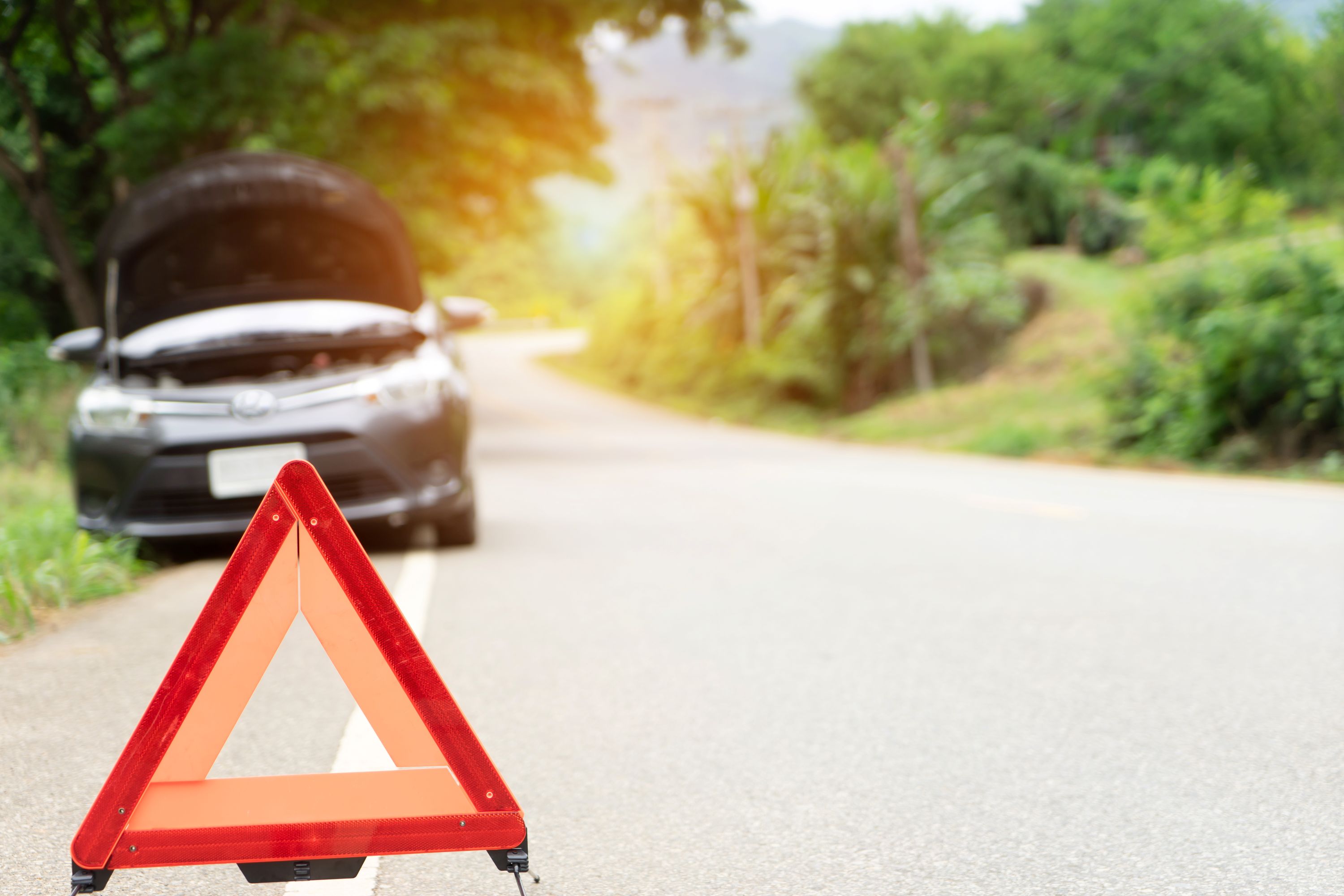
Along with using your hazard lights, try to place safety cones or reflective triangles, if you have them in your roadside emergency kit. Follow the 100-yard rule by placing them 10 feet behind your car first and then every 100 feet away when on a high-speed road.
If it’s dark, keep your interior light on so your tow truck driver will be able to find you easily and your headlights should remain on alert to approaching drivers.
- Stay Inside Your Car
The first thing you’ll want to do when your car breaks down is to step out and assess the damage caused. However, this is more dangerous than you think. As mentioned, IIHS reported that about 95% of stopped-vehicle crashes involve a moving vehicle striking the stationary one. In those crashes, over 50% of fatalities involve pedestrians outside the vehicle.
Not to scare you further, but the National Conference of State Legislatures (NCSL) reported that roughly 300 pedestrians per year are killed after exiting or returning to a stopped vehicle (about a 25% increase since 2014).
Unless your car is smoking or there’s a fire, the safest place to be is inside your vehicle with your seatbelt on. If you absolutely have to leave your car, make sure you do so on the side away from traffic and stay off the highway.
- Call for Help and Share Location
Once you are safe, you should call your roadside assistance or insurance and provide your exact location, give a brief description of your car, including the make, model and color and explain the issue at hand. If you are unsure about your exact location, share your location from your phone or try to get the coordinates. This will ensure you receive assistance as quickly as possible and as efficiently as possible, without you having to waste time and put your safety at risk to try and flag them down.
Try to keep your phone charged (a reminder to always carry a charger in your car) and avoid using your phone unnecessarily to keep the battery life strong. This means closing out of apps and reducing brightness on your phone.
- Watch Out for Strangers and Phony Tow Operators
Unfortunately, there are scammers everywhere, so it’s wise to stay cautious. While people may pull over and offer help, you can let them know your tow truck or roadside assistance is already on its way. Crack your window slightly to make sure there can be no contact from the other person.
3 things to keep in mind. Legit tow truck drivers will always:
- Arrive in a marked vehicle with proper identification
- Be dispatched through your insurance or provider.
- Provide a clear explanation of costs and destination before towing your car.
If at any point you feel unsafe, call 911 and make sure your doors are locked and your windows are all rolled up.
- Rely on “Move Over” Laws
Not many people know about Move Over laws, but these laws are designed to protect emergency responders, tow-truck operators and stranded motorists. Move Over laws require drivers to slow down or move over when approaching stopped vehicles with flashing lights and are followed in all 50 states (and DC). However, AAA reports that 23% of drivers don’t even know these laws exist and 40% of those who ignore them believe that the behavior is only “somewhat or not dangerous.”
Since 2015, over 1,600 people have been killed outside disabled vehicles in the U.S., according to AAA. This just shows how important Move Over laws are and why every driver must be aware of them and follow them.
- Prepare an Emergency Kit
When you have the right tools and are prepared, a roadside emergency will be far less stressful to deal with. These items will be helpful during emergencies, especially when the weather isn’t favorable.
Keep a well-stocked emergency kit in your car at all times with items that include:
- Flashlights and batteries
- Jumper cables
- Basic first aid
- Bottled water and non-perishable snacks
- Blankets
- Portable phone charger
- Trie pressure gauge and small air compressor
- Reflective warning triangles or cones
- Prevention is Protection
While breakdowns are not predictable, making sure you get regular maintenance on your car will go a long way in ensuring your car stays up to date and avoids frequent breakdowns - especially as it gets older or if you drive long distances often. Maintaining your car properly requires keeping up with oil changes, checking your tires and brakes often, doing service checks, and addressing dashboard warning lights ASAP.
You also want to always have emergency numbers such as your insurance provider, roadside assistance and a local tow provider saved in your phone for easy access when you need them.
Final Thoughts
Nobody wants to be estranged on the side of the road - especially when you are travelling alone. However, remaining calm will help you reduce stress and think clearly in the situation. Following the above helpful tips, such as moving your car to a safe location, remaining inside when possible and being aware of Move Over laws, will go a long way in reducing your risk.
Always remember, safety first, help second. Your tires can be changed and your engine can be fixed, but you don’t have to put your health at risk for any of these things.